 |
|||
|
|||
|
|||
 |
|||
|
|||
|
|||
|
|||
|
|||
|
|||
|
|||

IR Share is a privately- owned, independent, apolitical company whose aim is to inform and assist all players involved in social dialogue within and outside Europe. It has been the correspondent organisation for France of the European Foundation for the Improvement of Living and Working Conditions since 2009. |

|
Lead story Deliveroo’s conviction for undeclared employment exposes the fiction of the intermediation platform 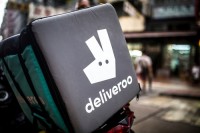 For the first time, in France, a platform has been found guilty of undeclared employment, by a criminal court, after making its delivery riders work under self-employed status rather than recruiting them as employees. The case concerns the food-delivery platform company Deliveroo which, on 19 April, was found guilty of the offence of undeclared employment and ordered to pay a 375,000 euros fine. It will also have to pay 50,000 euros in damages to each of the five trade unions that sued the company. Each of the 116 delivery riders concerned will be awarded between 500 and 4,000 euros in damages. This amount may be increased at hearings due to be held on 6 February 2023. Lastly, two former Deliveroo directors were found guilty of undeclared employment and given a suspended one-year prison sentence, a 30,000 euros fine and disqualified for 5 years from the right to hold a company directorship. A former head of operations was found guilty of “complicity in undeclared employment” and given a suspended four-month prison sentence and fined 10,000 euros. In her deliberation, the judge dismantled Deliveroo’s argument that it provided a “core delivery service”, ruling that the platform’s role is not merely one of intermediation between restaurants and clients: it is in fact an organised delivery service that controls, directs and sanctions its delivery riders (see Platform work). The judge completely rejected Deliveroo’s presentation of itself as a company that subcontracts tasks to freelance workers; instead, she described this as “legal window dressing”, and a “filter” whose sole aim is to conceal “a situation of employed status”, reports Barbara Gomes, a lecturer at Avignon University, whose verdict on Wednesday’s ruling is that “criminal justice was also social justice”. “This was a highly symbolic criminal conviction”, emphasises Chloé Debas, a researcher in political science and a trade union official at Solidaires, “because Deliveroo spent years accusing its delivery riders, and the trade unions and militants who supported them, of lying, when they explained that they were workers acting under the legal subordination of an employer, i.e. they were employees”. In the discussions currently under way between the Council and the European Parliament, this judgment, which shows that a platform’s business model means that it should be classified as an employer, will strengthen the case of those who advocate that platform workers – or at least those who meet a number of criteria evidencing a relationship of subordination – should be reclassified as employees. Demonstrating that a business model is based on wholesale social fraud, involving systemic use of undeclared employment, can only weaken the position of platforms. Chloé Lebas also believes that the compensation paid to the five trade unions “proves that trade unions are legitimately entitled to provide representation for platform workers”, something normally denied to them by platforms. |
|
1. European Union Projet  Pay transparency: : On 5 April, the report presented by Samira Rafaela (Renew Europe) and Kira Marie Peter-Hansen (Greens/EFA), which reinforces the proposal for a directive on pay transparency (see Pay transparency), received widespread support from MEPs, who cut the workforce threshold in the Commission’s proposal (see IR Notes 159) and the Council’s position (see IR Notes 176) – above which companies will have to compile a report on the wages and salaries they pay, to make it easier to establish comparisons and to identify any gender pay gaps within the same company – from to 50 to 250. It remains to be seen whether Parliament will be able to impose its preferred choice, in the face of a divided Council and total opposition from employers. Furthermore, where the report on pay highlights a gap of at least 2.5%, (rather than the 5% figure in the Commission’s proposal and the Council’s position), the employer must initiate a joint pay assessment, in conjunction with workforce representatives. This consultation is intended to lead on to the preparation of a gender equality action plan. The Commission is being invited to create a label marking out companies that have no gender pay gap. Barely three months remain for the French Presidency of the EU to reach a compromise between the Council and Parliament on this text. |
|
2. Member States Germany  A bill containing proposed revision of the legislation governing workplace labour relations : On 6 April, experts from the German Trade Union Confederation DGB, the Hans Böckler Foundation and the research world presented a global reform package in the form of a bill to revise the Workplace Labour Relations Act (BetrVG), on which the concept of “codetermination” is based. The proposal places the emphasis on six points: 1/ New rules to boost protection of the environment and equality in companies, by virtue of enhanced codecision-making rights. 2/ Measures to guarantee job security, by virtue of enhanced codecision-making, including in the areas of continuing professional development and personnel planning. 3/ Stronger codecision-making in order to guarantee personal protection and data protection in the workplace. 4/ Provisions to ensure that joint management within the company cannot come under de facto challenge within companies, as a result of their increasingly global and complex methods of organisation. 5/ Reforms designed to enhance the protection of employees’ individual rights. 6/ Reforms to facilitate works council elections and to make it harder for employers to disrupt the creation of works councils. This vast set of new provisions contained in the bill takes the form of detailed legal amendments of the Workplace Labour Relations Act (BetrVG), published in a study. One very important proposed amendment concerns the requirement for employers to refrain from taking – even indirectly – any measures likely to prejudice the rights enjoyed by the works council. In other words, as soon as an employer fails to honour any of the works council’s rights, it must be punished, for example by allowing the works council to take it to court, with the aim of suspending a decision or measure it has taken (the right to seek an injunction). At the present time, this is the case solely for works council rights that are subject to codecision-making, and not with other rights, e.g. where companies fail to abide by their obligations to inform and consult workers in the event of a proposed business closure. This option, which is also missing from the law governing European works councils (see interview, IR Notes 71), must also be granted to German works councils. Under the proposed trade union bill, the consequences of an offence will also have to be set aside. If the measures taken by the employer infringe the rights of the works council or of an employee, they will be declared null and void. |
|
Spain  Gender pay gap assessment tool : Under Royal decree 902/2020 of 13 October 2020 on equal pay for men and women, on 13 April, the government unveiled a free online assessment tool, prepared in conjunction with social partners, which companies can use to assess the value of jobs based on various criteria, such as their nature, the tasks to be completed, the required qualification level, the working conditions under which they are performed, etc. The aim is to facilitate the preparation of equality plans by identifying possible instances of gender discrimination (see press release).
|
|
Italy  Review of collective bargaining : On 13 April, the Di Vittorio Foundation and the CGIL trade union confederation presented a report, which analyses a sample of 2,168 agreements signed by social partners from 2019 to 2021, including 862 company-level agreements. The report highlights a significant growth in agreements establishing joint committees to manage the Covid-19 crisis and agreements on ‘agile working’, a concept that includes teleworking, among other things. The report also contains in-depth analysis of the way in which social dialogue operates at Electrolux, which is presented as a participatory model, at Autostrade per l’Italia (digitalisation and trade-union relationships) and at ENI, where there is a focus on the memorandum of understanding signed on 3 December 2020 with the three federations Filctem-Cgil, Femca-CISL, Uiltec-UIL on an “industrial relations model to support the energy transition process” (see press releases issued by CGIL and the Di Vittorio Foundation). |
|
Ireland
|
|
France 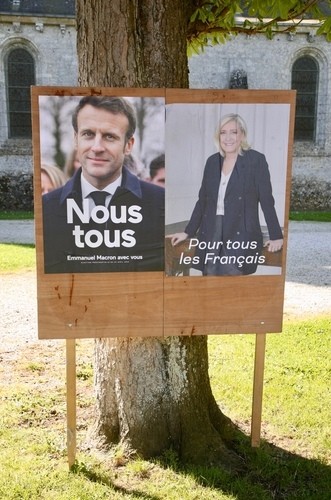 Presidential election : “The threat of seeing the far right in the Élysée Palace (editor’s note: the seat of the French Presidency) has never been so serious. This means that we now have a duty to speak out in order to avoid this catastrophic scenario”, say the secretaries-general of France’s two main trade-union confederations, Laurent Berger (CFDT) and Philippe Martinez (CGT) in a joint op-ed published in the Journal du Dimanche newspaper. While the CFDT has unequivocally advised its members to vote for Emmanuel Macron (see press release) in order to stop the far right candidate, Marine Le Pen, the CGT’s position is that “the world of work must not cast a single vote for the far right: instead, we must fight against it everywhere” (see press release). Faithful to its tradition, France’s third-largest group of affiliated trade unions, Force Ouvrière, is not issuing any voting guidance, while pointing out that its values are at odds with those of the far right (see press release). For its part, the CFTC explains that Marine Le Pen’s manifesto “is incompatible with the CFTC’s history, values and programme”. It argues that “the concept of national priority (…) is at odds with the cardinal value of human dignity.” (see press release). Nevertheless, the votes cast by French trade union sympathisers more or less reflect the French population as a whole, in terms of voting for Marine Le Pen: on average, 21% of trade union sympathisers voted for Le Pen, compared to 23% for the French population as a whole, according to a Harris-Liaisons sociales poll. However, this figure is 8 points higher than in 2017, and the poll shows Le Pen votes spiking at 31% among FO sympathisers and 29% among CFTC sympathisers.
|
|
Romania 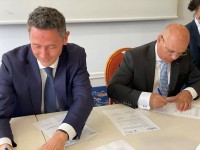 Collective bargaining agreement in banking and teleworking : On 8 April, social partners in the financial and banking sector signed their second branch-level collective agreement, following on from their initial agreement in 2018. This is one of the few branch-level agreements that exist in Romania. On the same day, they also signed an agreement on teleworking. These two texts will apply to almost 23,000 employees. The agreement raises the gross minimum wage fixed in 2018 from 2,500 to 3,300 lei (approx. 505 to 667 euros respectively) and establishes pay increases linked to length of service (see press release issued by the employers’ organisation CBPR). According to UNI Europa, the teleworking agreement contains the possibility of covering equipment costs, sets limits on the surveillance of workers while working remotely and establishes a right to disconnect for workers (see UNI Europa press release). |
|
3. Third countries United Kingdom  Women’s Health Strategy for England : The government has published a report summarising written responses from 436 organisations and experts in women’s health, to its call for evidence to inform preparations for the first-ever ‘Women’s Health Strategy’ for England (see press release), following on from a policy paper published by the government in December 2021. Minister for Women’s Health Maria Caulfield said: “women have lived in a healthcare system primarily designed by men, for men.” So now, the time has come to “tackle the gender health gap”. This undertaking also extends to women’s health in the workplace, a topic on which some of the contributions are focused. This should prompt global thinking aimed at making the workplace more welcoming for female workers, by addressing the types of suffering experienced by women, such as endometriosis, periods, the menopause, miscarriages and the impact of domestic violence on work. As far as the menopause is concerned (see also IR Notes 176), in addition to the familiar symptom of hot flushes, many organisations have provided examples of little-known symptoms such as brain fog, memory loss and anxiety, which can have a direct and serious impact on women’s concentration and prevent them from completing their tasks at work. Employers need to tackle taboo subjects and the stigmatisation of menopausal women: taking action in this way should lead to enhanced retention of female workers, improved productivity and reduced absenteeism among the working population. The document also covers other aspects of female-specific experience in the workplace, such as: endometriosis, where it advocates that women should be able to take sick leave if necessary, rather than having to use up their paid holiday when they need to take time off work; taking account of domestic violence, given that many women may lose their jobs because their attacker has ‘sabotaged’ their ability to work; and interrupted pregnancies (miscarriages) and stillbirths. |
|
4. Companies European company  A framework for managing the procedure for informing and consulting workers: : The digital services group Atos SE (109,000 employees) has concluded an agreement on Information, Consultation and Participation at European level, with a special negotiating body created from the previous Atos SE works council, whose governing agreement was denounced by management in 2020, following unsuccessful attempts to renegotiate it by way of an amendment (see IR Notes 163). In late 2021, the Versailles Appeal Court handed down a judgment instructing management to reinstate the dissolved council until at least March 2022, at which point if agreement had still not been reached, it would have to establish a council in accordance the subsidiary provisions of the directive on worker participation in a SE (see IR Notes 176). In the end, the parties signed an agreement before this deadline, replacing the agreement concluded in 2012. The text provides for a clearly sequenced procedure for informing and consulting workers, divided into an informing phase, and once the council’s requests have been met, a consulting phase. The procedure is designed to last for a period of 60 to 75 days from beginning to end, depending on the subject matter of the consultation, with a further 15 days allowed where expert advice is called upon (with a maximum budget of 175,000 euros per annum). At the end of this time period, which can be extended if necessary, the council will issue a formal opinion. If an opinion is not forthcoming, management will bring the consultation to an end and the council will be deemed to have implicitly issued a negative opinion. The council’s two annual meetings are held in person, but deputies can monitor the proceedings remotely “in listening mode”. The working groups set up by the council are required to use “communication technologies” and, in some cases, extraordinary meetings can be held remotely, especially if they last less than four hours. In exceptional circumstances, the council can appoint a working group that will be able to prepare an opinion, which in turn will have to be approved by the council. In terms of participation, the council can elect a three-member “participatory council” to liaise between the council and the company’s executive board. A balanced confidentiality clause indicates that management shall not “arbitrarily” classify information as confidential; it shall provide reasons for any request to maintain confidentiality and set a time limit on this. A clause provides protection for applicants seeking office as a council member and indicates that the council’s select committee must be notified of any dismissal proceedings brought against a member. Each member is granted 160 hours per annum to discharge their duties, plus four days’ training per annum. Council membership is deemed by management to be a “relevant and productive contribution” and must be taken into account in “workload planning” and one-to-one discussions. |
|
Transnational agreements  A charter on teleworking : On 6 April, the BNP Paribas banking group published a European Charter on Teleworking, which was signed in November last year with its European Works Council and the European trade-union federations UNI Europa and FECEC, (see press release). This text provides the group with “a common framework” in Europe for developing and strengthening teleworking (excluding crisis periods, such as the Covid-19 pandemic) (see Telework). It covers 22 countries and 132,000 employees. The charter lays down a number of general principles, such as a maximum rate of 50% of working time to be spent remotely, combined with a minimum of one day of on-site presence per week. The text establishes the principles of double volunteering (the manager must also be in agreement, i.e. there is no right to telework) and permanent reversibility, at the initiative of the employee or the manager. The place where teleworking is carried on must be either the employee’s principal place of residence or “another private, temporary or permanent location in the country”, within a range that allows the employee to reach the work site in a half-day, if necessary. This place must be suitable for remote work (safety, ergonomics, peace and quiet, secure internet connections, etc.) and for security reasons, cannot be “an external third-party location”, such as a coworking space. “Cross-border” teleworkers are not excluded from the arrangements, but a study will be conducted to assess their situation in light of existing regulations and their healthcare cover. The parties envisage the granting of at least one form of compensation from among four solutions: financial compensation, food vouchers, access to preferential rates offered by Internet access providers or to offers negotiated by the company with “external partners”. |
 Protection for Transferred Employees : On 7 April, the Engie European Works Council adopted a protocol established between the council and the construction group Bouygues, formalising the social commitments given by the Bouygues group as part of the process of purchasing Equans from the Engie group. This protocol “sets out the conditions for continuity of social dialogue on a European level once Equans is part of the Bouygues group” (see IR Notes 174). It was officially signed on 13 April and is now available for signature by the three European trade-union federations (EPSU, IndustriAll and EFBWW) which support Engie’s EWC (see press release issued by the Engie EWC). This is the first transnational agreement to be signed between a EWC, a company buyer (Bouygues) and European trade-union federations, without the seller (Engie) bearing any liability. |
|
5. Studies and reports  Overtime : A recent Eurofound study emphasises a split between countries in which working overtime is viewed as a normal part of employees’ duties, for which they are expected to make themselves available, and other countries, where it is seen as exceptional, to be authorised only under specific circumstances (see Overtime). With the growth of remote working following the pandemic, the way working hours are recorded is also changing and additional hours often constitute invisible ‘grey overtime’, i.e. time that is uncounted and unpaid. In general terms, unpaid overtime still seems to be pervasive in the EU. The study points out that overtime and long working days have harmful effects on a worker’s physical and mental health, and are illness risk factors.
|