 |
|||
|
|||
|
|||
 |
|||
|
|||
|
|||
|
|||
|
|||
|
|||
|
|||

IR Share is a privately- owned, independent, apolitical company whose aim is to inform and assist all players involved in social dialogue within and outside Europe. It has been the correspondent organisation for France of the European Foundation for the Improvement of Living and Working Conditions since 2009. |

|
Lead story An agency worker does not necessarily have to hold a temporary post  A German employee was employed by a temporary-work agency, starting on 1 September 2014. Until 31 May 2019, he was assigned exclusively to the German car maker Daimler, to work on an engine assembly line. However, his job was not intended to replace a worker, and consequently he held a permanent post. When it received an application for this period of employment, lasting almost five years, to be reclassified as a permanent contract, a German court referred several points to the EU Court of Justice, including that of whether an agency worker could hold a permanent post (CJUE, 17 March 2022, Case C-232/20, Case NP v. Daimler AG, not available in English). Article 1 of Directive 2008/104/EC states that it applies to agency workers “who are assigned to user undertakings to work temporarily under their supervision and direction.” (see Temporary agency work). Does this provision preclude an agency worker being assigned to the same undertaking for a period in excess of 55 months, in order to take up a permanent job rather than to provide cover for an absent employee? The Court of Justice rules that “the word ‘temporarily’ is not intended to limit the application of agency work to posts that would either not exist on a long-term basis or would have to be performed to provide cover, because this word refers not to the job held at the user undertaking, but the circumstances under which a worker is assigned to this undertaking”. Consequently, “the EU Parliament did not intend to limit recourse to agency work by allowing agency workers to hold only posts that are temporary in nature”. The German court also asked whether assigning this worker to the company for 55 months, due to successive renewals of his contract, can still be described as a ‘temporary’ mission, within the meaning of the said directive, or, on the other hand, is an abusive practice. The Court of Justice emphasises that there are no provisions in the directive “fixing the time period beyond which a worker’s assignment can no longer be described as ‘temporary’”. Likewise, there are no provisions requiring Member States to stipulate such a time period. Nor does the directive require States “to limit the number of successive missions performed by the same worker at the same user undertaking”. However, the first sentence of Article 5, paragraph 5, of the directive requires States to take the necessary measures to prevent employers assigning successive missions to an agency worker in order to circumvent the provisions of this directive. The State can therefore set a specific term beyond which a worker can no longer be deemed to be assigned ‘temporarily’. If it does not adopt such a measure, it is up to the national courts to determine this time period on a case-by-case basis, taking account of the sector’s specific characteristics and the objective explanations given by the employer, as to why it is resorting to a succession of agency missions with the same worker. Lastly, another point raised in the ruling is that, in the absence of any national legislation sanctioning non-compliance with the directive, EU law does not grant agency workers a subjective right to the creation of an employment relationship with the user undertaking. In other words, the agency worker cannot apply for their employment relationship to be reclassified as a permanent contract of employment, solely on the basis of EU law. If the worker believes that they are suffering a prejudice arising from a national law that is incompatible with the directive, they will have to bring a further lawsuit against the State, to seek redress for this. |
|
1. European Union Legislation
|
|
Projects  Pay transparency : On 17 March, the European Parliament’s committees on Women’s Rights and Employment adopted, by a large majority, their position on the proposal for a directive to strengthen pay transparency and combat gender-based pay discrimination (see press release), presented by the European Commission one year ago (see IR Notes 159) (see Pay transparency). MEPs also approved the decision to embark on inter-institutional negotiations (71 votes in favour, 20 against). Parliament has yet to vote at its plenary session, running from 4 to 7 April, to allow negotiations with the Council to proceed. The latter has already adopted its position, in December last year (see IR Notes 176). In their report (unavailable, but the compromise amendments elucidate the points added or amended by MEPs), MEPs have extended the scope of the obligation to produce a report on pay gaps to encompass companies with 50 or more employees, instead of the threshold of 250 employees specified in the Commission’s proposal. In December, when this position was adopted by the Council, some Member States clearly indicated that the threshold of 250 employees was a red line for them, and they would not agree to reduce it. As a result, this point will be hotly debated at the forthcoming negotiation, particularly since several European-level sectoral employers’ organisations immediately responded with a joint press release – which is an initiative seldom taken – to denounce this reduction, at a time when the European economy is struggling to recover from the shock of the Covid-19 crisis and also having to cope with the consequences of the war in Ukraine. Moreover, under the Commission’s proposal, a joint pay assessment will have to be undertaken in conjunction with employee representatives in cases where the report identifies a difference in average pay of at least 5% between female and male workers, unless the employer can justify this difference, based on objective and non-sexist factors. MEPs have also reduced this threshold to 2.5%. Lastly, MEPs want to ban contractual clauses that prevent employees from disclosing information on their pay or requesting information on the same workers’ pay category as their own or on other categories. |
 Corporate social and environmental responsibility : Following on from the position adopted by the Council, on 24 February this year (see IR Notes 181), the European Parliament’s Legal Affairs committee adopted, by an almost unanimous vote (22 votes in favour, 1 against and 0 abstentions), its report on the proposed revision of the directive on publication of corporate sustainability information (see Due diligence). This Wednesday, the European Parliament was due to approve the mandate to commence negotiations with the Council, with a view to the directive being adopted. The new rules would cover all large corporations, such as they are defined in the Accounting Directive, i.e. those meeting at least two of the following three criteria: at least 250 employees; a turnover of at least 40 million euros; and a total balance sheet value of at least 20 million euros. In contrast to the Council’s position, MEPs do not want a distinction to be made between companies listed on stock exchanges, and those that are not. They also voted to include non-European companies operating in the internal market. Companies with fewer than 250 employees will be able to comply on a voluntary basis with the standards governing publication of information. MEPs are calling on the Commission to establish criteria for the publication of additional information for companies involved in high-risk sectors (textiles, agriculture, mining, ore extraction). They also suggested that companies should be granted an additional one-year period to adapt to the new rules (the first public reports are due to be published in 2025). |
 Women on company boards : After 10 years of deadlock (see Women in the labour market), on 14 March, the Council adopted its position in favour of the proposal for a directive on improving the gender balance among non-executive directors of companies listed on stock exchanges and related measures. This law aims to set a quantitative target for the proportion of members of the under-represented sex on the boards of listed companies. Companies would thus have to take steps to reach the minimum target by 2027. They can choose between two targets: reaching a figure of 40% women among their non-executive directors or of 33% women on their company’s board. If these targets are not met, a company would have to apply clear, unambiguous and neutrally formulated criteria when appointing or electing directors (see Council press release). On the European Parliament’s side, the decision to commence negotiations with the Council was given the green light by a large majority, on 16 March, by the committees on Women’s Rights and Gender Equality and on Legal Affairs (see press release. The mandate was due to be adopted on Wednesday at a plenary session, and the negotiations would have to begin quickly, in an attempt to have this law adopted under the French Presidency of the EU. The text has received the support of most Member States, such as Italy, which has expressed its satisfaction at this step forward (see press release). > Find out more: See the European Parliament’s study of Member States’ policies to promote the presence of women on company boards and their effects on corporate governance. |
 Violence against women : On 8 March, the European Commission published a proposal for a directive on combating violence against women and domestic violence (see press release). This proposal is very timid in cases where violence is perpetrated in the workplace or affects the employment relationship. It is noteworthy that there is no reference to ILO convention 190 on violence and harassment at work. More specifically, no protection is provided under employment law for female employees who are victims of marital violence. Lastly, the proposal raises the prospect of making external counselling services available to victims and employers, in cases of sexual harassment at work. However, one article is devoted to training: persons with supervisory functions in the workplace, in both the public and private sectors, shall receive training on how to recognise, prevent and address sexual harassment at work, including on risk assessments concerning occupational safety and health risks, to provide support to victims affected thereby and respond in an adequate manner. Those persons and employers shall receive “information about the effects of violence against women and domestic violence on work and the risk of third-party violence”. The European Trade Union Confederation welcomes the text but expresses disappointment at the lack of emphasis on providing protection in the workplace and at the absence of any reference to the use of collective bargaining as a tool for creating safer workplaces (see press release). It should be noted that the Commission proposes to make cyber-harassment and incitement to violence or hatred online, a criminal offence. |
|
Social update  Health and safety at work : The resolution on a new EU strategic framework on health and safety at work post 2020, adopted by the Committee on Employment and Social Affairs on 1 February this year (see IR Notes 179), was given the green light by the European Parliament at its plenary session on 10 March. This extremely comprehensive report formulates a number of requests for legislative acts. For example, it calls on the Commission to update the directive on exposure to carcinogens, mutagens or reprotoxic substances “on a continual basis and in an ambitious timeframe”, “by setting up occupational exposure limit values for at least 25 additional priority substances in the directive without delay, following the presentation of the action plan and by end of 2022”. MEPs want the Commission to supplement the European Schedule of Occupational Diseases and to transform this into a directive, so that it will include work-related musculoskeletal disorders and work-related mental-health disorders, in particular depression, burnout, anxiety and stress, all asbestos-related diseases and skin cancers and rheumatic and chronic inflammation. MEPs are also calling on the Commission to put forward a legislative framework of minimum requirements applicable to teleworking, and a directive laying down minimum standards and conditions to ensure that all workers are properly able to exercise their right to disconnect. MEPs also invite the Commission to submit a legislative initiative setting out responsibilities and obligations linked to occupational health and safety, with regard to artificial intelligence systems and new working methods. MEPs assert that “the emergence of new forms of monitoring and management of workers based on the collection of large amounts of real-time data […] can lead to legal, regulatory and ethical questions”. They call, in particular, for “the introduction of safeguards against the adverse impacts of algorithmic management on the health and safety of workers”, while at the same time indicating that these “algorithms deployed in the areas of work” must “be transparent, non-discriminatory and ethical”. Moreover, “algorithmic decisions must be accountable, contestable and, where relevant, reversible, and consequently must be subject to human oversight”. Something else worthy of note in the report is a call for the Commission to thoroughly and urgently assess the new and emerging risks of climate change on occupational health and safety, in order to better protect workers from exposure to higher temperatures, natural UV radiation and other related safety hazards. |
 Telework and the right to disconnect : At a Conference on the Right to Disconnect and Telework, organised by the European Parliament and the European Commission on 15 March, the European Commissioner for Jobs and Social Rights set out the European Commission’s position regarding the European Parliament’s repeated calls for a directive on telework and another on the right to disconnect. On the latter subject, he observed that: “There is no reason why, in some countries, this right exists and in other Member States of the European Union, this right is denied. Therefore, it is important, at the European level, to establish this right”. While emphasising that it is up to social partners to address this issue, he commented that: “In response to Parliament’s resolution on the right to disconnect and telework, the Commission committed to follow up with a legislative act in full respect of proportionality, subsidiarity and better law-making”. The adoption of such acts is subject “to a two-phase consultation of social partners who may decide to act by means of agreements”. Nicolas Schmit did not mention any timetable for this but stated that the Commission “has launched a large-scale study” to support its plans (see speech). |
|
|
Sectoral social dialogue  Insurance : On 9 March, European social partners in the insurance sector adopted a joint declaration on diversity, inclusion and non-discrimination. They agree on definitions of diversity, inclusion and discrimination in the workplace, and affirm that “respectful, tolerant and inclusive workplaces are key for employee satisfaction, engagement and empowerment and for the sector’s growth, success, innovativeness, creativity and sustainability”. The signatories point out that measures to prevent discrimination against all existing protected groups (including LGBTI+, trans and intersex workers and older employees) should be an integral part of company culture and policy.
|
|
2. Member States Ireland
|
|
France
|
|
3. Third countries United Kingdom  Violence and harassment : On 7 March, the British government ratified ILO Convention 190 on violence and harassment, which affirms that everyone has the right to a world of work free from violence and harassment (see ILO press release). The government has announced that it will introduce a new duty on employers, requiring them to take steps to prevent their employees from experiencing sexual harassment and introduce explicit protections for employees from harassment by third parties, such as customers and clients. Furthermore, the Equality and Human Rights Commission is planning to draft a statutory Code of Practice on sexual harassment and harassment in the workplace (see government press release). > See also: The Scottish trade union STUC has published a report on sexual harassment at work. It emphasises that one third of women have been victims of sexual harassment at work during the past year, and 85% of women said their complaint and their experience were not taken seriously and dealt with appropriately. The report contains a set of recommendations.
|
|
4. Companies European works councils  A demerger and two European Works Councils : The British pharmaceuticals laboratory GlaxoSmithKline (GSK) has announced the stock market flotation, in London, of its non-prescription medicines and consumer healthcare business, which will now be known as Haleon (7,000 employees). Following the demerger, GSK (34,000 employees) will focus on prescription pharmaceuticals and vaccines, a market deemed to be more profitable than self-medication. Prior to this stock market flotation, which is due to take place this summer, on 10 September 2021, management signed two new EWC agreements to cover the two entities (GSK agreement and GSK Consumer Healthcare-Haleon agreement). The two texts are very similar and differ mainly at the level of the EWC’s composition. They also cover the United Kingdom and Switzerland, and a number of countries with fewer than 100 employees (in the case of GSK) or 150 employees (in the case of Haleon), are clustered together. |
|
Restructuring 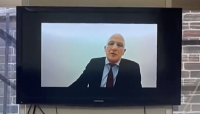 Collective redundancies issued via Zoom : On 17 March, the management of ferry company P&O, a subsidiary of the Dubai-based DP World group, announced, via a video message broadcast on Zoom, that the company’s 800 British employees were being dismissed with immediate effect and replaced by agency workers that very day. According to the RMT trade union, these workers were non-unionised, mostly of Indian nationality and were being paid 2.38 dollars (2.15 euros) per hour (see press release). The TUC confederation called on the government to present an emergency bill bringing an end to such ‘fire and rehire’ practices. The TUC is calling for tougher sanctions against businesses that fail to honour employees’ rights to information and consultation linked to collective redundancies. At the present time, businesses that disregard these rights are liable for only very small fines and can escape their responsibilities by offering to pay workers derisory amounts of compensation. “What happened at P&O is a national scandal – it can’t ever be allowed to happen again”, said an indignant Frances O’Grady, TUC General Secretary. (see press release). The European (ETF) and International (ITF) Transport Workers’ Federations, which both condemned this announcement (see press release), point out that DP World had signed up to the UN’s Global Compact (see press release), so this action speaks volumes about the ineffectiveness of such types of instrument, which are supposed to strengthen corporate social responsibility. In a blog post, consultant Tom Hayes (BEERG), who admits that he has been involved in advising managements on “more restructuring projects” than he cares to remember, doubts the company is in breach of UK law. “With ships flagged in countries other than the UK and employment contracts under Jersey law (…) everything is off-shored and consultation obligations may have fallen through legal cracks”. Nevertheless, “whatever the legalities, the way P&O went about the matter is utterly appalling and indefensible”. This is a “case study in how not to do things”. |