 |
|||
|
|||
|
|||
 |
|||
|
|||
|
|||
|
|||
|
|||
|
|||
|
|||

IR Share is a privately- owned, independent, apolitical company whose aim is to inform and assist all players involved in social dialogue within and outside Europe. It has been the correspondent organisation for France of the European Foundation for the Improvement of Living and Working Conditions since 2009. |

|
Lead story Less than a quarter of a century to eradicate poverty in the European Union 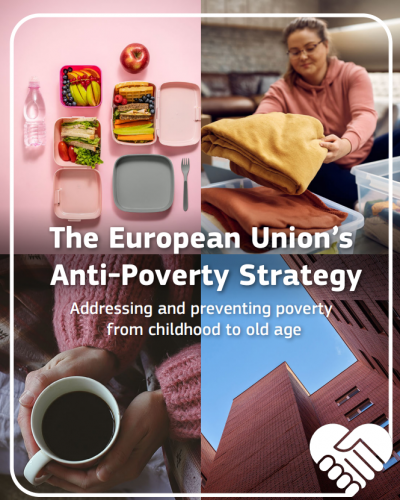 The objective is an ambitious one, and it includes an intermediate stage: cutting the number of people at risk of poverty and social exclusion by at least 15 million by 2030. In other words, achieving the objective set in March 2021 by the action plan on the European Pillar of Social Rights (see IR Notes 159). The EU is lagging behind when it comes to combatting poverty. The number of people at risk of poverty in the EU fell by just 2.9 million between 2019 and 2024. Furthermore, in 11 Member States, there were more people in this category in 2024 than in 2019. In presenting its very first Anti-Poverty Strategy, on 6 May, the European Commission is setting out to reverse the trend (see press release). This strategy is being accompanied by several initiatives, such as a proposal for a Council recommendation on fighting housing exclusion; a communication aimed specifically at child poverty; and a communication to boost the strategy for the rights of persons with disabilities 2021-2030. One component of the new strategy is to encourage the integration into the labour market of people who are fit for work, particularly “the long-term unemployed, the inactive and those facing specific barriers.” During the second half of 2026, the Commission will launch the first-stage consultation of European social partners to obtain their views on EU action to support the activation of persons excluded from the labour market. However, as the NGO ATD Quart Monde notes, “presenting employment as the main way out of poverty is a simplistic response to the multidimensional reality of poverty, and opens the way to reducing the debate to a matter of personal responsibility, whereas the key role in keeping people in poverty is played by systemic factors”. For all that, the Commission’s initiative recognises poverty in its multidimensional reality and also places the emphasis on prevention, access to services that are essential to people’s well-being and social integration. Results can only be achieved by mobilising the full range of actors, with action having to be coordinated at European, national, regional and local levels. And by allocating the necessary resources within the 2028-2034 Multiannual Financial Framework, currently under discussion at Council level. |
|
1. European Union Project  Artificial intelligence : On 7 May, negotiators from the Council and the European Parliament reached a provisional agreement, with the aim of simplifying European digital legislation (Omnibus VII). The measures adopted include two proposals for a regulation that are intended to simplify the EU digital legislative framework and implementation of harmonised rules on AI (see Council and Parliament press releases). The agreement postpones the rules relating to high-risk AI systems: the new application dates would be 2 December 2027 for stand-alone high-risk AI systems and 2 August 2028 for high-risk AI systems embedded in products. These two texts will now have to be formally adopted by the Council and Parliament before being published in the OJEU. The compromise has been strongly condemned by the IndustriAll Europe trade union federation, which comments that “one of the most alarming elements of the agreement is the decision to move the Machinery Regulation from Annex I, Section A of the AI Act [...] to Section B instead”. The federation argues that “this is not [just] a technical adjustment”, because Section A “guarantees that high-risk products automatically fall under the strictest AI safety obligations across the EU” (see press release). IndustriAll Europe notes bitterly that “when industrial lobbying intensifies, workers’ rights and occupational safety protections become negotiable”. |
 Consultation on sustainable reporting standards : On 6 May, the European Commission launched a public consultation on the proposed revision of European sustainability reporting standards (ESRS) and its annexes, and on a voluntary sustainability reporting standard for use by small undertakings and its annexes. Building on the Omnibus I simplification package and the new scope of application of the Corporate Sustainability Reporting Directive (CSRD), the two delegated draft regulations published “aim to cut administrative burden for EU businesses while maintaining high-quality sustainability disclosures”, the Commission explains (see press release). The draft voluntary standard will also support companies that lie outside the scope of mandatory CSRD reporting. It establishes a “value chain cap”, preventing CSRD in-scope companies from requiring value-chain partners with 1,000 employees or fewer to provide more information than what the voluntary standard covers. Stakeholders – including employee representatives and European Works Councils – can submit their feedback via the “Have Your Say“ portal until 3 June 2026. The Commission will then adopt the two delegated acts as soon as possible and submit them to the European Parliament and Council for scrutiny under the no-objection procedure (two months, extendable by a further two). |
|
Legislation  Globalisation Adjustment Fund : The Council has definitively adopted the revision of regulation (EU) 2021/691 as regards support for workers affected by imminent job displacement in enterprises undergoing restructuring (see press release). The new regulation will enter into force on the day after it has been published in the OJEU. The text, which was presented by the European Commission on 1 April 2025 (see IR Notes 249), seeks among other things to expand the scope of EGF aid, so that it will no longer apply only to dismissed workers but also “to workers affected by imminent job displacement in enterprises undergoing restructuring” (see IR Notes 269). The introduction of a cap on EGF funding in favour of any given enterprise (4 million euros per Member State for any given financial year), should also be noted. |
|
2. Member States Italy  Collective bargaining : On 1 May, the government approved a new labour decree-law (Decreto Lavoro) focused on fair pay, employment incentives and combatting contractual dumping and exploitation of platform workers (caporalato digitale). In particular, the decree marks a clear political direction taken by the Meloni government in the field of industrial relations. Italy has opted not to set a national statutory minimum wage, but instead to boost the role played by national collective labour agreements signed by the most representative trade unions and employers’ organisations. The text provides for mechanisms designed to limit the use of “pirate contracts” (contratti pirata), i.e. collective labour agreements concluded by unrepresentative organisations, which are often associated with lower levels of pay and unfavourable working conditions, and to favour companies that apply recognised collective labour agreements. The reaction of the employers’ organisation Confindustria has been broadly positive. Its President, Emanuele Orsini, welcomed a text that will “strengthen collective bargaining” and “curb contractual dumping”. Trade union reactions have been more nuanced. The CGIL has strongly criticised the decree: its Secretary General, Maurizio Landini, has said that the new measures will favour companies more than workers, and has expressed regret at the lack of a proper universal statutory minimum wage. For its part, the CISL has taken a more favourable position: it views the decree as “an important first step” and supports the choice of strengthening nationwide collective bargaining. |
|
France  Youth employment : On 7 May, the government published its “Future Employment Plan“. The ambition is to facilitate careers guidance and encourage access to employment for 16-25 year-olds, via a threefold strategy: |
|
Netherlands 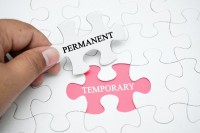 Stronger protection for flexible workers : On 12 May, the Chamber of Representatives passed a bill designed to strengthen the status of workers employed on precarious contracts. If the Upper Chamber also approves it, the bill can enter into force on 1 January 2028 (see press release). The principle underlying it is that temporary contracts should apply only to temporary work. When such a contract comes to an end, employees must be granted an open-ended contract more quickly, and can no longer be offered another temporary contract after six months. Moreover, zero-hours contracts will be replaced by an hourly pay scale, where the difference between the minimum and maximum rates must not exceed 130%. Employees will be entitled to turn down requests to work longer hours than the maximum number specified in their contract. Furthermore, if there is a structural increase in the volume of work, the employee must be offered a contract with more hours. Temporary workers too, will be better protected: the bill conforms with EU law, which stipulates that temporary workers must be granted working conditions equivalent to those of permanent workers. |
 Better protection for jobs in times of crisis : On 24 April, the Council of Ministers approved the bill on maintaining employment in a crisis scenario, namely if a company’s business declines by 20% in two months (see press release). The measure allows the employer, for a period of no more than six months, to either adapt the tasks performed by their employees so that they can continue to work the same number of hours and remain on their current wage; or to impose a 10% cut in their wage to offset hours not worked due to the crisis. In the latter case, the State may cover a proportion of the company’s wage costs (65%). |
|
3. Companies European Works Councils  Acquisition : On 11 May, the IndustriAll Europe trade union federation denounced the agreement, concluded on 29 April, by the global elevator and escalator manufacturer Kone to take over its German competitor TK Elevator (TKE). The move went ahead without prior consultation of unions and workers’ representatives. This takeover “would create the world’s largest elevator and escalator manufacturer, employing more than 100,000 workers in over 100 countries” (including 45,000 in the EU), says IndustriAll Europe, which is appalled that employees and their representatives “found out when everyone else did through the financial press and an email sent by the CEO after going public” (see press release). “The announcement constitutes a serious breach of the GFA signed in 2021 between TK Elevator, the Group Works Council, IG Metall and IndustriAll” and “clearly violates the EWC and Global Workers Council agreements, signed in 2022 and 2024 respectively, that lay down information and consultation rights.” IndustriAll general secretary Atle Hoie said: “These agreements are not a formality, they are a binding commitment to consult workers before decisions of this magnitude are made, not after” (see press release). |
 Restructuring : An extraordinary meeting of the Nestlé European Information and Consultation Committee (NECIC) was held on 22 April, at Lausanne (Switzerland), to officially launch the information and consultation procedure relating to the cost-cutting plan announced by Nestlé management on 16 October 2025. The NECIC claims that this process could lead to 16,000 job losses worldwide. As indicated in the NECIC press release, the methods to be used for information and consultation purposes have been set out in a specific protocol listing and defining the information to be provided to the consultancy firm Syndex, which has been appointed by the Committee. At the end of a 30-day period, the NECIC will submit an opinion on the plan, to which the Europe zone’s management must respond before the plan goes ahead. The NECIC’s press release states that, in accordance with the legal procedures in force, the countries concerned (mainly Germany, France, the United Kingdom, Spain and Italy) will commence their information and consultation processes but cannot conclude them until the NECIC’s opinion has been submitted. As the plan is due to be implemented over a two-year period, progress reviews will also be held at each NECIC ordinary meeting in 2026 and 2027 (see IUF press release). |
|
Trade unionism  Trade union officials from the UNI-H&M global trade-union alliance, created by the UNI Global Union confederation, met on 5 and 6 May in Stockholm. Alliance members, who are planning to renew the global agreement concluded with the Swedish fashion giant, also met with representatives of H&M’s global management, who discussed a number of topics with them, including social policy and minimum employment standards (see press release). |