 |
| |
IR Notes 273 – 06 May 2026
www.irshare.eu |
|
|
| |
| |
A question for…
Jean-Philippe Lhernould, Law Professor at the University of Poitiers
 In your opinion, following the revision of the rules relating to coordination of social security regimes (see Lead story), what are the main changes that will affect workers, in concrete terms?
It’s important to stress that the adoption of the text revising Regulations 883/2004 and 987/2009 is, in itself, a victory for EU law. After 10 years of deadlock, Member States and the European Parliament have shown that it was possible to move forward. The reforms concern the chapters covering family benefits, long-term care and the entitlement of economically inactive persons to claim benefits. Three other topics are worth highlighting, via a few examples.
The “unemployment” chapter was at the root of a number of stalemate situations, but these have been resolved through compromise. From now on, unemployment benefits for people living close to a country’s borders will be payable by the State where they were last employed, subject to certain conditions (notably that they have worked for at least 22 consecutive weeks in the other country, i.e. not their country of residence). Luxembourg has been granted a transition period lasting up to five years. In the case of Switzerland, another country that employs large numbers of people who live close to its borders, agreement will have to be reached on the joint committee overseeing the Agreement on the Free Movement of Persons (AFMP), so that a similar solution can be found. A number of other unemployment-related rules are being revised, notably in connection with the “totalisation of periods” mechanism: the so-called “one-day” insurance rule, which was being abused by migrants returning to a country with the aim of claiming unemployment benefits there, will be abolished. People may remember the case of the French traders working in the City of London who, when a serious financial crisis erupted, were repatriated from London to Paris, where they carried on working for a few days before being made redundant. The aim was to enable them to claim French unemployment benefits, worth several thousand euros per month. One final example: in future, unemployment benefits can be exported for a period of six months (instead of the current three), which will make it easier to look for a job in another Member State.
Other significant changes are to be found in the chapter on the law applicable in the social security field. They include the following: the definition of “social security” posting is being aligned with the definition used in labour law by the “posted workers” directive; and A1 certificates, which are used by workers to notify a posting to the host country and prove their affiliation to another Member State’s social security scheme, will have to be requested before departing to work in another country. Business trips and missions lasting no longer than three days will however be exempt from prior notification (other than in the construction sector). Where there is doubt regarding an A1 certificate’s validity, the process of dialogue between the competent authorities of two Member States is being refined. New criteria, associated with identifying the place where a business has its registered office, are appearing for the purpose of defining multi-activity. However, their inclusion in the recitals of the regulation affects their legal force.
Lastly, it will be noted that measures to combat fraud are now included in the regulations, which contain a definition of fraud. A framework for effective data exchange between Member States has been being created, and digitalisation is another priority of the revised texts.
|
|
|
 |
|
|
|
| |
Who we are?
IR Notes is a fortnightly newsletter produced by IR Share and its network of experts, and is available in several European languages (English, French, German, Italian, Spanish, Polish). It offers Europe-wide monitoring of employment law, labour relations and employment policy. It is available by subscription for 273 euros per year .
The team: This issue was producaed by Inès Bollet, Victoria Fonseca, Ambre Grenier-Boley, Frédéric Turlan and Iris Turlan. Find out more about the IR Share team on our website.
Subscribe to IR Notes Via the IR Share website or by calling us on: +33 (0)6 81 41 53 95 or
E-mail: frederic.t@irshare.eu
Legal notice. Publisher: IR Share SARL - 5, Les Compères - 89520 Fontenoy, France – Tel.: +33 (0)6 81 41 53 95 – share capital 1,500 euros – commercial register (RCS Auxerre): 512 567 959. Managing editor: Frédéric Turlan. Hosting: ALTEO by Damien Cornillet - Château - 89500 Villeneuve-sur-Yonne. CPPAP no.: 0626 Z 93933.
|
|
|
|
| |
Follow us on LinkedIn!
 Why not connect to the IR Notes LinkedIn page, so that you can keep up with developments in the issues we’re covering, between two editions? You’re welcome to follow us! There are already 816 of you following us!
|
|
|
|

|
|
|
Lead story
At last, a step forward for freedom of movement for workers in the EU
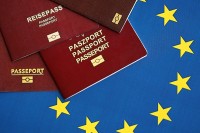 On 22 April, representatives of the Council and Parliament reached a provisional agreement on revising the rules on coordination of national social security systems, as provided for by regulation nos. 883/2004 and 987/2009 (see Council press release). In so doing, they resolved a matter that has been under discussion since 13 December 2016, when the European Commission first put forward its proposal. This agreement was confirmed by the Council on 29 April, by a majority vote (21 Member States) but it has yet to be formally adopted by Parliament (see Council press release). The somewhat abstruse terms in which the agreement is couched conceal a key element of free movement for people within the EU, and especially workers.
The EU does not have powers to harmonise national social security systems: its mission is to coordinate them in such a way that they do not disadvantage EU citizens who wish to exercise their right to free movement. This coordination is based on four principles:
1. citizens are covered by the legislation of just one country at a time, so they only pay contributions in one country;
2. citizens have the same rights and obligations as the nationals of the country where they are covered;
3. when citizens claim a benefit, their previous periods of insurance, work or residence in other countries are taken into account if necessary (the ‘totalisation principle’);
4. citizens entitled to a cash benefit from one country, may generally receive it even if they are living in a different country (‘exportability principle’).
Among other things, the revision will amend the rules concerning payment of unemployment benefits in cross-border situations; the conflict-of-laws rules that determine which legislation is applicable to workers; and the rule concerning workers posted in the context of performing services. It means that jobseekers who were “active” in a Member State other than their country of residence for an uninterrupted period of 22 weeks, will be entitled to receive unemployment benefits from the country where they were last employed (and no longer those of their country of residence), if they satisfy the conditions stipulated by the country’s national legislation to be entitled to such benefits.
As regards posted workers, submitting prior notification to the competent authorities is the rule. Exceptions apply to business trips and short-term activities (i.e. those with a maximum duration of three consecutive days of work within a period of 30 consecutive days). However, these exceptions do not apply to the construction sector. When it comes to determining which legislation is applicable to persons carrying out professional activities in two or more Member States, the press release says that the revised text “provides additional guidance on identifying the registered office or place of business of the undertaking or employer in order to determine which country’s legislation should apply to them”.
This complex text will have to be analysed, to identify all of its practical consequences. Nevertheless, it is already being welcomed by European social partners, who, on 23 March this year, issued a joint declaration calling on lawmakers to finally agree on a text. After the provisional agreement was announced, BusinessEurope (see press release) and the European Trade Union Confederation (see press release) applauded the outcome, as did social partners in the construction sector (see FIEC, EBC and EFBWW joint press release).
|
1. European Union
Social update
 European Works Councils : The Expert Group set up by the European Commission to help Member States transpose the new Directive (EU) 2025/2450 on European Works Councils is due to submit its report this summer. This report may constitute a useful point of reference when it comes to transposing and interpreting the directive. It may also be taken into consideration by the Court of Justice.
In the meantime, the minutes of the Group’s meetings already provide an insight into the problems raised by Member States and social partners, and the responses given by the Commission. The minutes of its first meeting, held on 12 February, discuss the form taken by applications to set up an EWC: the Commission states that the directive does not exclude the submission of written requests in digital format and that, in the case of a separate submission of a request, the six-month period allowed for convening the special negotiating body shall be triggered at the time a valid request is submitted, and not by the date of receipt of the first letter.
Requirements relating to gender balance and transnational matters have also been discussed. The Commission points out that “in order to be effective, consultation must refer to decisions that have not yet been taken and whose effects have therefore not yet materialized”. The minutes of subsequent meetings (on 23 March, 13 April) will be progressively published online, on the Expert Group’s page.
|
 Simplification : After being pressed by the Council (see conclusions of 19 March), which wants to strengthen the single market (“One Europe, One Market”), on 28 April the European Commission unveiled “A Simpler, Clearer and Better Enforced EU Rulebook”, set out in a communication supplemented by two annexes (see press release). It aims to create a more “effective and efficient regulatory framework” by working on several themes, such as the principle of “simplicity by design” in each legislative proposal, and “deep cleaning” of the current body of EU law.
The field of social affairs is not addressed directly, other than posting of workers, which is mentioned in an annex to the communication where, among other things, the Commission announces that it wants to strengthen the European Labour Authority’s mandate and introduce an ELA electronic posting declaration (“e-declaration”).
|
- Restructuring : On 30 April, the European Commission announced a proposal to mobilise 2 million euros of aid from the European Globalisation Adjustment Fund (EGF), to help 803 workers who lost their jobs following the bankruptcy of Belgian car glass manufacturer Soliver (see press release).
|
- Trainees : On 30 April, the European Trade Union Confederation sent a letter to EU Labour Ministers, urging them to pass an EU directive on regulation of traineeships. Discussions between Council and Parliament negotiators on this proposal for a directive were due to begin on 5 May.
|
2. Member States
Spain
 Health and safety in the workplace : On 28 April, the Council of Ministers approved a reform of the law on prevention of occupational risks (Ley de Prevención de Riesgos Laborales). This important reform is part of the 2023-2025 Occupational Risks Prevention Strategy, signed in February 2023 by the government, the trade unions (CCOO and UGT) and the employers’ organisations (CEOE and CEPYME).
The reform takes account of the impact of digitalisation and the transformations taking place in work organisation systems (see press release). It explicitly includes psychosocial risks, the effects of climate change and the right to disconnect. For the first time, mental health is explicitly recognised as a priority. Companies will have to plan specific measures for coping with natural disasters and extreme climate phenomena. Workforce diversity also lies at the heart of the reform: special attention is paid to gender equality, the working conditions of pregnant workers, and workers’ age. The prevention aspect will take account of the gender dimension: it must be possible for any work station to be occupied by either men or women, which implies an obligation to take into account their physical characteristics, their anthropometric measurements and other biological characteristics likely to influence risk exposure.
One year after the law’s promulgation, it will be supplemented by a specific application regulation on psychosocial risks, which will seek to promote healthy working environments and to prevent serious situations, including suicidal behaviour, from arising.
|
France
 Inclusion : On 24 April, the polling and market research firm IFOP and L’autre cercle association published the 2026 edition of the Barometer of inclusion of LGBTQIA+ persons in the world of work (FR). Although the data gathered demonstrates a rise in the visibility of LGBTQIA+ persons in the professional sector, it also highlights a significant increase in harassment cases over the past two years. In fact 36% of employees questioned admit that they had been the victim of at least one LGBT-phobic attack within their organisation, compared to 28% in 2024, when the previous study was performed, while 37% claim to have suffered discrimination at the hands of their management, compared to 25% in 2024.
Faced with this finding, the association is eager to alert companies to the importance of prevention, with a view to protecting all employees, regardless of their gender or orientation.
|
Sweden
 Parental leave : The gender equality index compiled by the civil servants’ trade union TCO (1.2 million members) for 2025 reveals that the share of parental leave taken by men has continued to fall for the second year running. This reversal of the trend towards parental equality is unprecedented during the period since gender equality statistics were first compiled in 2006.
Women accounted for 68.5% of days of parental leave and childcare leave taken in 2025 (compared to 68.3% in 2024), while men took just 31.5%. “Since 2018, progress towards greater equality in the take-up of these benefits has been virtually at a standstill”, notes TCO (see press release).
|
3. Companies
European Works Councils
 EWC resources : A further milestone has just been reached in the progress of the landmark legal dispute between the EWC secretary of the US group Verizon and its European management, relating to payment of expert consultants’ fees and training costs incurred by the EWC.
The Irish Supreme Court has granted the management’s application for leave to appeal against the ruling of the High Court, which ordered the group to pay the cost of certain items (see IR Notes 263). In its decision, the Supreme Court suggests that, given the number of disputes currently in progress, the means required to fund EWCs is an issue that merits consideration by the EU Court of Justice. It emphasises that there appears to be “a significant number of employees who are entitled to be clear on what the legislation does or does not provide for”.
Moreover, the Irish legislation to be interpreted “implements an EU Directive which appears not to have been judicially considered or interpreted to date. Its correct interpretation is a matter of general public importance, which may require a reference to the CJEU.” It is therefore highly likely that the Irish Supreme Court will refer a number of preliminary points of law to the Court of Justice.
|
 New agreement : On 6 September 2025, the management of the Hamelin group, members of the special negotiating body and the French trade unions CFE-CGC, CGT and FO signed a new European Works Council agreement. This text replaces the one signed on 7 January 2013, which had previously overseen the creation and operation of this body. The Hamelin group is specialised in the manufacture and marketing of school and office products, and employs around 3,000 employees worldwide.
The agreement entered into force on 1 January this year. It covers all EU and EEA countries, plus the United Kingdom and Switzerland, where the group has at least 10 employees. The EWC is made up of nine members: three representatives for France, one for Poland and one for the UK, while the other four seats are assigned to representatives covering several countries grouped together in geographical zones. The EWC can be provided with information about a project affecting a single country, “from the moment that a proposed collective redundancy or workforce reduction involves at least 50 employees at one or more establishments”.
The confidentiality clause is particularly restrictive: members are bound by a professional secrecy obligation and an obligation to maintain discretion with regard to group employees who are not EWC members, thereby limiting the EWC’s useful value.
|
4. Studies and reports
 Psychosocial risks : On 28 April, the ILO published a report on psychosocial risks (see executive summary) which, for the first time at global level, assesses the impact of these risks, which are responsible for more than 840,000 deaths annually, caused by cardiovascular disease and associated mental health problems. One of these risk factors is long working hours (i.e. more than 48 hours per week, something that affects 35% of workers at global level).
The ILO believes that another matter of major concern is exposure to violence and harassment: 23% of workers worldwide say they have fallen victim to at least one form of violence or harassment during their working life. Psychological violence is the one most widely reported (18%). The ILO expresses regret that just 18% of the 338 agreements concluded between 2000 and 2025 by the multinational companies registered in its database deal explicitly with the issue of mental health or psychosocial factors, in their occupational health and safety provisions.
The ILO emphasis that “the associated risks can often be reduced by improving work design, organization and management. This includes reviewing workload, task allocation, supervision and other elements of the working environment, while strengthening workers’ capacity to recognize and respond to risks”.
|
|
|