 |
|||
|
|||
|
|||
 |
|||
|
|||
|
|||
|
|||
|
|||
|
|||
|
|||
|
|||
|
|||

IR Share is a privately- owned, independent, apolitical company whose aim is to inform and assist all players involved in social dialogue within and outside Europe. It has been the correspondent organisation for France of the European Foundation for the Improvement of Living and Working Conditions since 2009. |


|
Lead story Can Ireland remain a paradise for employers in terms of hosting EWCs?  In May 2022, the European Commission issued a letter of formal notice to Ireland, instructing it to review its European Works Council legislation and citing “a number of shortcomings” in Irish legislation (see press release). In practice, the problem encountered by EWCs established in Ireland, such as that of Verizon, is that access to justice is virtually impossible in cases involving a breach of information and consultation rights (see European Works Councils). EWCs are not allowed to refer their cases directly to either the Workplace Relations Commission (WRC) or the Labour Court, which are the two bodies tasked with dealing with labour law disputes. Although the possibility of recourse to arbitration exists under Irish law in the event of a dispute, this does not happen in practice, due to the absence of any implementing regulations. Moreover, the penalties payable by the employer range from 1500 to 10,000 euros – an amount unlikely to act as a deterrent for a multinational company. |
|
1. European Union Legislation  “Working time” package : On 15 March, the European Commission very discreetly (no press release issued) adopted a working time “package” comprised of three documents: 1/ A Report on the implementation by Member States of Directive 2003/88/EC concerning working time (see Working time). This document, which analyses the progress made in transposing the directive, emphasises among other things an “incorrect transposition of derogations from daily and weekly rest”, but the Commission is not proposing a revision of the directive. 2/ A detailed working document on the transposition. 3/ An interpretative communication taking into account EU Court of Justice case law relating to the directive. This text seeks to increase the directive’s legal security and clarity of interpretation, and incorporates the thirty or so new rulings. The Commission therefore plans to help the Member States and stakeholders to implement and interpret this directive, based on promoting health and safety at work. Let us not forget that in 2009, Parliament and the Council failed to revise this directive, and that, faced with deadlock, the social partners also failed to negotiate an agreement aimed at revising this text in December 2012. Since then, it is the Court of Justice that has been making the law governing working time in the EU.
|
|
Sectoral social dialogue  Artificial intelligence : On 22 February, European social partners in the metalworking sector adopted Joint conclusions on Artificial Intelligence in the MET industries. Their statement “aims at providing guidance for the social partners” in these industries “on how to approach AI at the workplace” (see Artificial intelligence).. The signatories “support an early stage consultation of workers and, where applicable, their representatives, when deciding on the introduction of new AI systems including the design, preparation of specifications for all relevant actors, development and deployment of the system.” |
|
2. Member States Croatia  Sunday working : The government has expressed its satisfaction at the passing of a law that establishes the principle of a ban on retail outlets opening on Sundays, with the exception of shops located within bus or railway stations, airports, museums and service stations. This law will enter into force on 1 July and allows traders to open their business on 16 Sundays per year. Davor Filipović, who is the country’s Minister of the Economy and Sustainable Development, has dismissed any risk of disastrous economic effects (redundancies and a drop in business), and has instead expressed satisfaction that the 118,000 employees working in this sector will be able to spend more time with their friends and family (see press release). |
|
Denmark 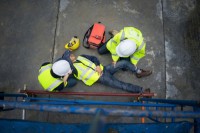 Health and safety at work : The Danish Working Environment Authority has published worrying figures, showing that 43 fatalities were recorded in 2022, making it the worst year since 2008, and marking the end of a steady drop in fatalities since the late 1970s through to 2017 (see press release). These deaths occurred mainly in three sectors: construction, building demolition and goods transportation, and occurred primarily among Polish and Lithuanian workers. For its part, on 2 March, the National Health Council released morbidity data in two reports on diseases and risk factors. This data reveals that osteoarthritis and cervical and lumbar pains cost employers approximately 7.3 million sick days per year, an amount corresponding to approximately 30,000 full-time jobs. Lene Krabbe Dahl, Federal Secretary of Danish trade union 3F explains: “The sick leave associated with these symptoms costs Danish society billions of crowns. It’s vital that we improve the working environment, so that people are not exhausted. This situation exacts a heavy toll on health services, employers and individuals, when employees have to take sick leave due to a poor working environment”. In response, on 14 March, the government embarked on negotiations with the parties in Parliament (see press release), aimed at reaching a new 2023-2026 “agreement on the working environment”, with funding of 1.3 billion crowns (approx. 175 million euros). Going forward, this agreement is expected to provide guaranteed long-term financing for the Working Environment Authority (203 million crowns from 2027 onwards, i.e. almost 24 million euros), better protection for employees engaged in asbestos removal from buildings and a policy for improving mental health (see FH press release). |
|
Luxembourg 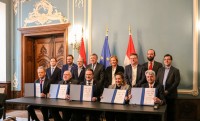 Tripartite agreement : On 7 March, the government and the social partners signed a new tripartite agreement, supplementing those of September and March 2022. The text guarantees that the system of automatically index-linking wages and salaries will stay in place through to the end of 2024: as soon as inflation exceeds 2.5%, wages and salaries will be raised accordingly. In return, employers will be entitled to reduce their social security contributions to offset this pay rise. The agreement, which includes other measures aimed at protecting employees’ purchasing power, has been welcomed both by the two trade-union confederations (see press releases issued by OGBL and LCGB) and by the employers’ organisation UEL (see press release).
|
|
3. Third countries United Kingdom  Menopause : The government has appointed a “Menopause Employment Champion”, in the person of Helen Tomlinson, Head of Talent (UK & Ireland) at The Adecco Group. Her mission will be to encourage employers to develop menopause policies to create more supportive environments that will help women experiencing menopause to stay and progress in work (see press release). Although this appointment has no precedent in Europe, it represents the government’s main announcement, despite the ambitious recommendations contained in two reports: Menopause and the Workplace: How to enable fulfilling working lives, published in November 2021, to which the government responded in July 2022 (see report and IR Notes 176), and the report published by the Women and Equalities Committee of the House of Commons, Menopause and the workplace, published in July 2022, to which the government responded in late January (see report). |
|
Ukraine  Reform of collective bargaining : After being criticised for passing legislation and introducing draft legislation that is at odds with the body of EU law (the “acquis communautaire”) and with trade union rights (see IR Notes 201 and IR Notes 191), the Ukrainian authorities seem to be modifying their position. Parliament did in fact pass Draft law 7628 on 23 February – covering Ukraine’s so-called “European integration” as regards “collective labour agreements and contracts”, reforming the previous 1993 legislation governing collective bargaining and social dialogue (see press release issued by the Ministry of the Economy). The text has to be signed by President Zelensky to allow it to enter into force. The government says that the law has been approved by the social partners and ILO experts. The text makes it easier for non-representative or newly created trade unions to access collective bargaining; it establishes an interface between the various levels of collective agreements (territorial, branch, company, etc.); and it allows the signatories of a collective agreement to suspend certain provisions in the event of force majeure. Furthermore, this text transposes two EU directives into Ukrainian law: firstly Directive 2001/23/EC of 12 March 2001, which protects employees in the event a company is transferred; and secondly Directive 91/533/EEC of 14 October 1991, which relates to an employer’s obligation to inform employees of the conditions applicable to their contract or employment relationship. Consequently, its Parliament emphasises that “Ukraine is steadily continuing to bring its own legislation closer to EU legislation, norms and practice in the areas of employment, social policy and equality of opportunity” (see press release). |
|
4. Companies European company  Demerger : After calling on expert assistance, the SE works council of the French group Atos, which is specialised in digital transformation, has issued an unfavourable opinion regarding the group’s proposed demerger into two companies. One of these would retain the Atos name and its historical IT infrastructure management services business, while the other – Evidian – would group together the rapidly growing cybersecurity and high-performance computing businesses. Under this proposal, the current SE works council would remain in place to cover the first company, but the new Evidian SA company will have to negotiate the creation of its own European Works Council. This means the future company’s employees may be without a body representing its European employees during the negotiation period, which could last for three years. The directive does not provide for a solution to remedy the loss of employees’ information and consultation rights at translational level, in the event of a demerger. A temporary body can be set up during the negotiation period of a future EWC agreement only if management pro-actively takes steps to do so. Management may also give the SE works council a commitment that they will negotiate this agreement within a shorter time period, as recently happened at Suez.
|
|
5. Studies and reports  French legislation grants the employees of large groups the right to elect one or two employee representatives on the company board, but it also obliges the latter, once appointed, to resign from any other mandates they may hold as employee representatives within the group, as soon as they take up their seat on the board. This “non-cumul des mandats” rule prohibiting employees from holding concurrent mandates also applies when the EWC elects one of the two employee representatives on the board, thus requiring the elected member to relinquish their seat on the EWC, as well as any national and/or local mandates they may hold. In a study published by the European Trade Union Institute (ETUI), Stéphane Vernac, Professor of Private Law at Jean Monnet University, Saint-Étienne, re-examines this legislation and discusses its compatibility with EU law in particular. It seems hard to challenge the logic of the incompatibility rule, even though the author emphasises a few flaws in it. The study encourages companies to be more transparent in their appointment processes, and also to ensure that employee representatives who become board members are granted an equivalent level of redundancy protection to that enjoyed by workforce representatives, if they are deprived of such protection when forced to relinquish their national and/or local mandates. > See also: ETUI study of The Europeanisation of board‑level employee representation in France, published in 2022. |