 |
|||
|
|||
|
|||
 |
|||
|
|||
|
|||
|
|||
|
|||
|
|||
|
|||
|
|||
|
|||

IR Share is a privately- owned, independent, apolitical company whose aim is to inform and assist all players involved in social dialogue within and outside Europe. It has been the correspondent organisation for France of the European Foundation for the Improvement of Living and Working Conditions since 2009. |

|
Lead story The impact of inflation on minimum wages means that questions must be asked about the level of the living wage  In November 2022, the ILO was already stating in its Global Wage Report 2022-2023 (see press release and executive summary) that inflation is biting into the purchasing power of persons who are paid the minimum wage, while at the same time emphasising that “despite nominal adjustments taking place, accelerating price inflation is quickly eroding the real value of minimum wages in many countries”. The phenomenon is confirmed at EU level by the initial results of the annual update on minimum wages, published on 23 January by the European Foundation for the Improvement of Living and Working Conditions (Eurofound) (see A question for… opposite). In all EU countries that have a statutory minimum wage (with the exception of Spain, where negotiations are continuing), minimum wages rose by 12% on average between January 2022 and January 2023, compared to around 6% last year (between January 2021 and January 2022). However, during that same period, prices rose faster than minimum wages, which fell in real terms in most countries. Just seven Member States were able to maintain the purchasing power of employees who were paid at the minimum income level (s. Minimum wage). This situation means that a thinking process needs to be initiated even more urgently, regarding the procedure used for setting the minimum wage in Member States, as provided for by the directive on adequate minimum wages adopted in October of last year (see IR Notes 192 and IR Notes 188). During periods of high inflation, an annual review of minimum wages does not seem to be enough; this review also needs to focus on the fact that inflation “has a greater cost-of-living impact on lower-income earners”, as the ILO points out. This trend also impacts on large groups which, all over the world, are committing to pay the minimum wages applicable. However, as the ILO report shows, this commitment may result in employees being paid wages below the poverty threshold and therefore not receiving the living wage. Becoming aware of this situation led the TotalEnergie group, for example, to promise in 2021 “to assess any discrepancies between the direct salary and the living wage in all its subsidiaries” (see press release). At the end of 2021, 98% of its employees were being paid the living wage, with the group promising to raise this figure to 100% by the end of 2022, which led to an upward adjustment in the pay of around 3,000 employees. The social partners should place this matter at the top of their agenda because, as the new ILO Director-General, Gilbert F. Houngbo, points out: “Income inequality and poverty will rise if the purchasing power of the lowest paid is not maintained. (…) This could fuel further social unrest across the world and undermine the goal of achieving prosperity and peace for all.” |
|
*** Last minute *** Strengthening social dialogue  On 25 January this year, the European Commission unveiled its “Strengthening social dialogue” package, which includes a communication entitled “Strengthening social dialogue in the European Union: harnessing its full potential for managing fair transitions” and a proposal for a Council recommendation inviting Member States to further strengthen social dialogue and collective bargaining (see press release). We will return to this development in the next edition. |
|
1. European Union Social update  Evaluation of the quality framework for traineeships : On 10 January, the European Commission published an evaluation of the European Quality Framework for Traineeships, which was adopted in the form of a Council recommendation in 2014 (see press release). This framework sets out 21 quality principles for traineeships that Member States are recommended to put into practice in order to ensure high-quality learning and adequate working conditions (s. Traineeship). The Commission has confirmed that, during the course of this year, it will put forward an update of the quality framework, strengthening certain principles, such as fair remuneration, access to social protection and adapting better to labour market developments (like remote work). Interestingly, the report illustrates the wide variety of national practices when it comes to traineeships, and provides examples from several countries (Austria, Spain, Finland) of existing collective agreements that offer trainees certain guarantees, such as paying a minimum remuneration, defining a training plan or establishing working conditions. |
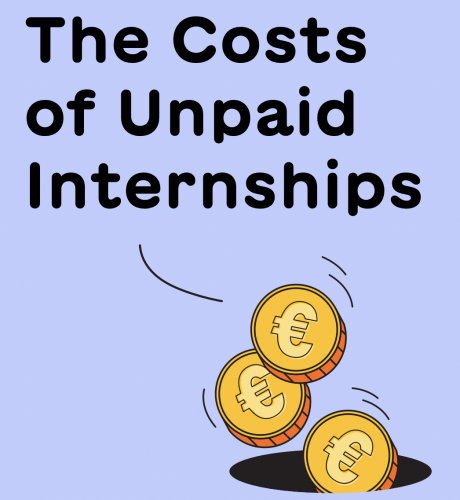 Unpaid internships : The European Youth Forum has published a discussion paper on unpaid internships, highlighting a source of inequality of access to the labour market: to complete an internship, which often last six months, a student has to spend an average of 1,028 euros per month. Students who have completed two internships find it easier to secure a job. The EYF therefore notes that a student has to spend more than 12,000 euros on internships. In cases where these positions are unpaid, it is much harder for students from households with limited means or where the breadwinner is in precarious employment, to undertake internships and thus to gain access to employment (see press release and “Ban unpaid internships!“ petition). |
|
|
|
Case law  Discrimination against self-employed workers based on their sexual orientation : The Court of Justice has ruled that sexual orientation cannot be used as a reason for refusing to conclude or renew a contract for services with a self-employed worker. The case concerned a Polish self-employed worker who specialises in the preparation of audiovisual material. He and his partner published a video on YouTube, calling for tolerance towards same-sex couples. The public corporation with which he had recently concluded a new contract then cancelled this contract, and has no longer used his services since that time. The Court states that occupational activities that fall within the scope of Directive 2000/78 (s. Harassment and violence at work), which aims to combat discrimination, can include those carried out by self-employed workers, provided they are “genuine and are pursued in the context of a legal relationship characterised by a degree of stability”. The Court emphasises that the concept of “dismissal” referred to in the directive also covers “the unilateral termination of any activity” performed by a self-employed person. It explains that “just as an employed worker may involuntarily lose his or her job following, for example, a ‘dismissal’, a person who has been self-employed may also find himself or herself obliged to stop working due to his or her contractual counterparty and thus be in a vulnerable position comparable to that of an employed worker who has been dismissed”. The facts surrounding the “termination of contract” appear to constitute “an involuntary termination of activity of a self-employed person which may be assimilated to dismissal of an employee” (CJEU, 12 January 2023, Case C-356/21, J.K). |
|
2. Member States Denmark  Abolition of a public holiday : The government has announced its intention to abolish a public holiday, to help finance the increased costs associated with maintaining the country’s defence and security, as a result of the war in Ukraine (see press release). If the draft law is passed, Denmark’s “Great Day of Prayer” (Store Bededag), a public holiday that falls on the 4th Friday after Easter, will become a working day from 2024 onwards. The trade unions are vigorously challenging this move: they regard it as an attack on the Danish social model, given that wages and working conditions are a matter for the social partners. As this public holiday is written into collective labour agreements, the unions view this step as unacceptable interference on the part of the State (see press release). |
|
France 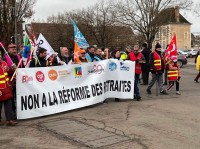 Pension reform : On 10 January, the Prime Minister set out the proposed pension reform (see press release and press pack) that was adopted in the Council of Ministers on 23 January (see press release and draft law). All of the French trade unions strongly object to these plans, and they are now united for the first time since 2010. On 19 January, the French mobilised in large numbers for a day of strikes and demonstrations, to express their displeasure (see joint press release). The dispute relates primarily to a proposed increase in the retirement age, which currently stands at 62 but under the reform would gradually rise to 64 in 2030. The target number of pension contribution years required in future to qualify for a full retirement pension will still be 43 but this figure will be implemented sooner than previously planned, namely in 2027 instead of 2035; each year it will be raised by one quarter (i.e. a three-month period), starting this September. Although this reform is being presented as a responsible measure ensuring social justice, the trade unions are denouncing it as a budgetary reform that is particularly unfair on people who began their working life at an early age and those whose working life has been intermittent (this is often the case with women). To enhance the employment rate among the over-60s (which is 56% in France, compared to 60.5% on average in the EU), the government plans to establish a “seniors index” that will measure companies’ capacity to recruit, train and retain these older workers. Companies with more than 300 employees will be required to publish their performance, and those with more than 1,000 employees will be penalised under the new rules if they engage in poor practice. It should be noted that the reform is being introduced within the framework of a draft amending law on social security financing, which will reduce the amount of time spent on discussions and debates in Parliament, allowing the bill to progress faster than ordinary legislative proceedings. According to experts, in addition to this reform representing an infringement of the democratic process, the risk is that some of these measures will subsequently be overturned by the Constitutional Council if they are not directly linked to the object of this law, i.e. social security financing. A further day of mobilisation, involving all of France’s trade unions, is scheduled for 31 January (see joint press release). |
|
Hungary
|
|
3. Third countries United Kingdom  Limiting the right to strike : As the UK witnesses its biggest strikes for 30 years, the government has announced that it will be introducing a new bill to Parliament, establishing a basic minimum service level in the public sector, to guarantee “minimum safety levels” that will protect users of public services in the event of a strike. This core service provision will be introduced in “vital public services”, including health, education, fire and rescue services, transport, decommissioning of nuclear installations and border security (see press release). For the purpose of setting these “minimum safety levels”, the government will engage in consultation with the departments concerned: fire, ambulance and rail services. In the case of healthcare, education, nuclear, transport and border security services, the government hopes “that voluntary agreements can continue to be made”. This plan will follow on from the restriction on the right to strike introduced by the law passed in July 2022, allowing businesses to recruit temporary skilled workers to fill staffing gaps left by strikers (see press release). Experts believe that these measures, which have been strongly criticised by the trade unions, may be in breach of the freedom of association provisions contained in Article 11 of the European Convention on Human Rights. The TUC’s General Secretary, Paul Nowak, said: “This is an attack on the right to strike. It's an attack on working people.” He announced that “Trade unions will fight this every step of the way” (see press release). |
|
4. Companies European works councils  A new agreement covering fewer people : Following the takeover bid launched by the Veolia group for its competitor Suez, the Suez group’s European perimeter is now smaller, though it remains independent. The group, which now has 40,000 employees, embarked on a negotiation in September 2022 to revise its European Works Council Agreement, concluded in 2013, with a view to “amending the obsolete provisions of the agreement, while at the same time keeping to the spirit” of the original agreement as far as possible. In the introductory section of the new agreement, which was signed on 22 November 2022, the parties point out that “social dialogue can enhance the pertinence and effectiveness of decisions taken by management, by allowing employee representatives to know and understand the reasons why these decisions were taken, and to put forward proposals to supplement or enhance them”. The agreement contains a significant clause dealing with transnational issues and in particular “matters concerning a subsidiary company located outside France that either come under a decision taken by the dominant company or are a direct consequence of one of the directions taken by the group, and which are important for European staff in terms of the extent of their potential effects or involve a transfer of activities between Member States”. EWC secretary Christine Chiffre explains: “This enables us to include within the scope of the council’s competence, projects undertaken in a single country that could be based in other countries”. The group’s 5,000 British employees will continue to be covered by the agreement. The agreement further stipulates that management “can also pass on to the EWC any information that it sees fit, regarding the group’s global strategy”, thus going beyond the confines of its European perimeter. Compared to the previous text, the new agreement reduces the workforce threshold required to qualify for a member on the European Works Council, from 250 to 100 employees. The number of working parties is cut from four to two: there will be a permanent working party on occupational health and safety and another temporary working party, whose task will be to work on a topic selected by the EWC. The EWC is currently made up of 15 full members, and it has a select committee staffed by four members, which will meet six times a year. The agreement provides for two plenary meetings per year. |
 Renegotiation : After discussions lasting a year and a half, IBM management and members of IBM’s EWC have revised their European Works Council agreement and its internal regulation. “The aim was to remove some ambiguities, in order to have clarity and avoid the different interpretations that led to discussions and sometimes legal disputes over the past years”, explains EWC secretary Marc Born. Members are convinced that with the current amended agreement, they can continue to have a constructive and open dialogue with management. The agreement, which will remain in force until 2028, provides for two regular meetings per year and several further select committee meetings, plus interpreting and translation services, training and the involvement of external experts. However, the United Kingdom is no longer represented, despite the EWC’s request for this. |